Why Your Content Gets Views but No Customers
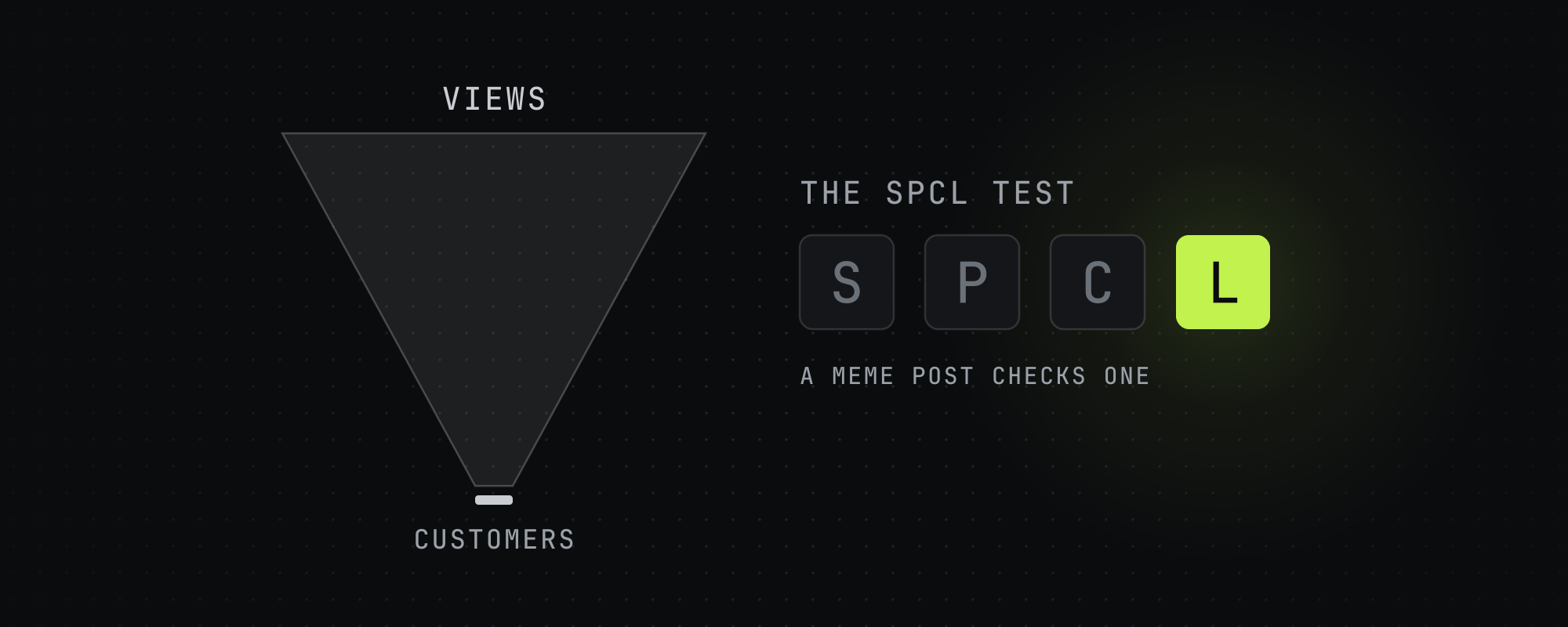
Views measure attention, not trust, and a piece of content can rack up plenty of the first while proving almost none of the second. Alex Hormozi's SPCL test checks four things a stranger needs before they become a customer: status, whether you give them a direction that produces a real result, credibility, and likeness. Content that only checks one of the four can still perform on views and do very little toward an actual sale.
A business can do everything right on camera and still watch its content rack up views with no matching bump in customers. That's usually a scorekeeping problem: the content is being measured on the wrong number.
Alex Hormozi named the actual problem plainly in a recent talk: "some of you are chasing views when what I think you want is prospects who are more likely to comply with a future request", meaning book a call, reply to a message, or eventually buy. Views count attention. They say nothing about whether that attention turned into anything a business can use.

Views measure reach. They measure nothing else.
A view is a single, binary event: somebody's thumb stopped for long enough that the platform counted it. It doesn't say whether they believed you, remembered you, or would recognize your name a week later. Two videos can pull identical view counts and produce two completely different businesses, because the number that actually predicts a sale isn't sitting in the view count at all.
The four-part test
Hormozi has a name for the checklist he uses instead: SPCL. Rather than spell out each letter on camera, he walks through what's missing when content fails the test, using ordinary meme and reaction posts as the example.
By his description, that kind of content demonstrates almost no status. It gives a viewer no direction on what to actually do, so they get no result in their own life from having watched it. It demonstrates no credibility, since there's nothing in it to be credible about. The one thing it might carry is likeness, some sense of who you are as a person, and that's the only box it checks.
Put together, the four things a piece of content has to prove before a stranger turns into a customer come out to roughly this: that you have some standing worth paying attention to, that following your direction gets someone a real result, that you can be trusted to know what you're talking about, and that there's an actual person here they're starting to recognize. Content that only nails one of the four can still get watched. It just doesn't do much work toward a sale.
Score your own content against it
Run a few common formats through the test and the pattern shows up fast. None of these are wrong to make. The question is which boxes each one checks, and whether that's the pair your business actually needs right now.
| Content type | What it proves | What it's missing |
|---|---|---|
| Meme or reaction repost | Some likeness, if your personality comes through | Status, direction, and credibility all sit close to zero |
| Day-in-the-life post | Likeness, and a little status if the day looks impressive | No direction, and no credibility unless a real result shows up on screen |
| How-to or demo | Direction, plus credibility if it actually works | Likeness, unless you're the one appearing in it |
| Customer result or case study | Credibility and direction together | Likeness, unless you're the one telling it |
| Unscripted long-form conversation | Credibility and likeness at once, hard to fake either | Direction, unless the conversation lands on a clear takeaway |
Notice what the strongest rows have in common: they combine at least two of the four. A case study pairs credibility with direction. A demo you appear in pairs direction with likeness. The formats that tend to underperform on customers, despite doing fine on views, are the ones that only ever check a single box.
Raw content wins on this test specifically
We wrote separately about why raw content is beating polished content more broadly. The SPCL test explains part of why: unscripted content tends to raise credibility and likeness at once, since it's harder to fake either in the moment. A scripted, heavily edited piece can still hit status and direction, but the two boxes that build the most trust are the two that polish makes harder to prove, not easier.
What to track instead of views
None of the four qualities above show up on a standard analytics dashboard, which is a large part of why most businesses never check for them. A few proxies get closer.
- Replies and messages that ask a real question. A comment that engages with what you said is a much stronger signal than a like, since it means someone is evaluating you rather than just scrolling past.
- Saves and shares. Both require a small decision the viewer didn't have to make, either that this is worth coming back to or worth putting their own name behind.
- Branded search over time. It's slow and lagging, but a rise in people searching your name or your business directly is one of the few signals that status and credibility are actually accumulating rather than just being spent on one video at a time.
- Unprompted requests to work with you or buy, showing up in comments or DMs without you asking for them. This is the closest thing to a live readout of whether the four-part test is being passed.
None of this makes views worthless. They're still the raw material trust gets built from. The mistake is stopping there and treating a view count as the finish line when it was only ever the entrance.
Frequently asked questions
What is the SPCL framework?
SPCL is Alex Hormozi's shorthand for what a piece of content has to prove before a viewer becomes a customer: status, whether it gives the viewer a direction that produces a real result, credibility, and likeness. Content that only checks one of the four can still perform well on views while doing very little to actually produce customers.
Why do I get views but no sales from my content?
Views measure attention, not trust, and a video can be widely watched while proving almost nothing about you that a stranger would act on. Run it against the four-part test: does it show real standing, does it give a viewer a way to get a result, does it demonstrate you know what you're talking about, and does it let them get to know you as a person. Content missing most of those tends to plateau on views without converting.
What metrics should I track instead of views?
Replies and messages that ask a real question, saves and shares, and branded search volume over time all track closer to trust than a raw view count does. None of them show up on the same dashboard as views, which is a large part of why most businesses never look at them.
Does going viral actually help a business?
It depends what the viral piece proves. A clip that racks up views without demonstrating status, direction, credibility, or likeness mostly built an audience for that one clip rather than for the business behind it. The pieces worth chasing are the ones that combine reach with at least two of the four.
Is raw or polished content better for building trust?
Raw and unscripted content tends to score higher on credibility and likeness specifically, since it's harder to fake either in the moment and gives a viewer a more unfiltered read on the person behind it. That doesn't make production value worthless, it just means a business without a studio isn't at a disadvantage on this particular test.
Sources
Every figure above traces to one of these. Where a source sells the thing it measured, we say so.
- 01You Need to Prepare Before Social Media Changes Forever · Alex Hormozi, MoreMozi, September 2026Primary source for the SPCL framework and its description of meme content, quoted and paraphrased throughout this article.
Keep reading
Content Is a Business Function, Not a Marketing Channel
A typical seven-figure business publishes 365 pieces of content a year. Alex Hormozi's portfolio publishes 35,000. The gap is staffing, not talent, and it changes how content should be run.
What Percentage of Short-Form Clips Actually Go Viral?
Alex Hormozi says roughly one in ten shorts becomes a 2-3x outlier. We checked that against 189 clips and 172,192 views from our own network. The real shape of the distribution is different, and more useful.
Why UGC Ads Beat Polished Video Ads
Phone-shot creator ads outperform studio video on nearly every paid metric. Here's what the numbers actually say, who published them, and where the advantage stops.
10 Short-Form Video Hook Frameworks That Actually Work in 2026
The 10 hook frameworks that drive the highest 3-second hold rates on TikTok, Reels, and Shorts in 2026, with examples and the pacing rules behind them.